Tangará da Serra – Mato Grosso – Brazil
Queima Pé Spring: Revitalization Shows Results and Ensures Water Supply Regularity
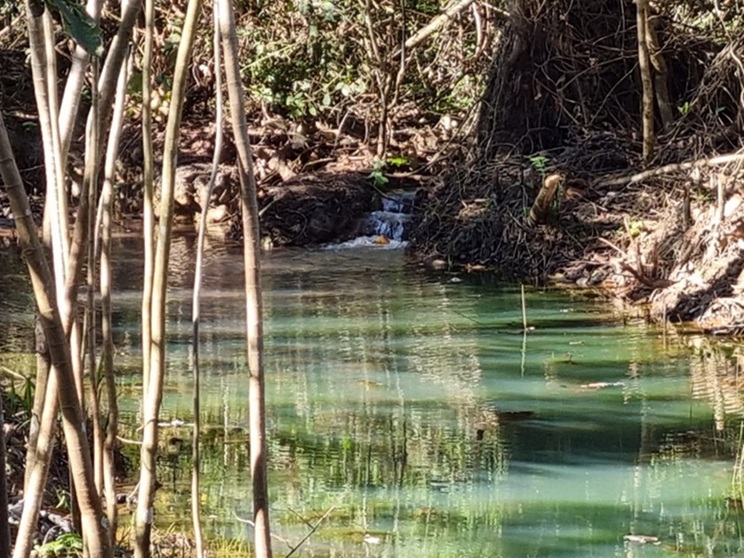
Four years after the launch of a comprehensive environmental recovery project, the spring of the Queima Pé River in Tangará da Serra (Mato Grosso – Brazil) is now showing clear signs of hydrological recovery. This was confirmed by the latest flow measurement conducted this July by environmental consultant Délio Eloi Siebert, director of the Pantanal-Amazon Conservation Institute (IPAC).
It’s important to remember that the Queima Pé is the main water source supplying the urban population of Tangará da Serra. Last week, Siebert measured a daily water production of 743,040 liters at the spring — equivalent to 4.72% of the city’s daily urban water demand.
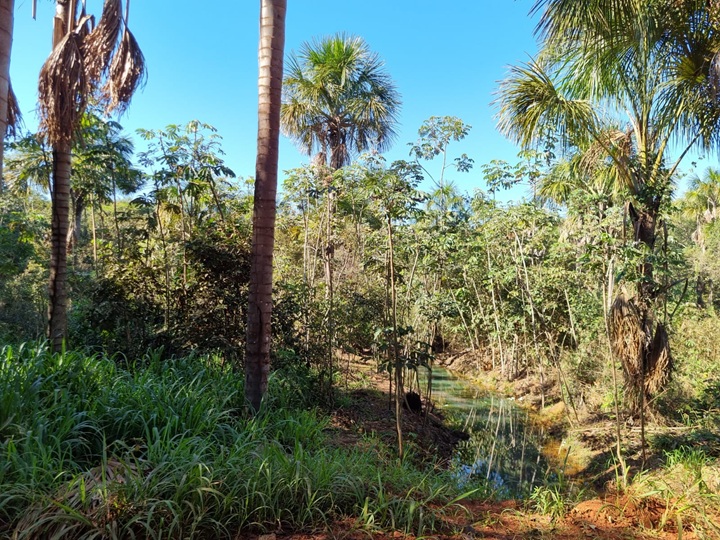
Image of the Queima Pé spring on July 12, 2025 (Saturday).
The numbers are promising, especially considering the significant flow reduction seen in previous years before 2022. As witnessed by the EB newsroom, the spring’s recovery is a direct result of the actions carried out in 2021 by IPAC, funded by the State Public Prosecutor’s Office and private companies, with support from City Hall, Samae, Sema-MT, CBH Sepotuba, Rotary Club, the Rural Union, and other civil society organizations.
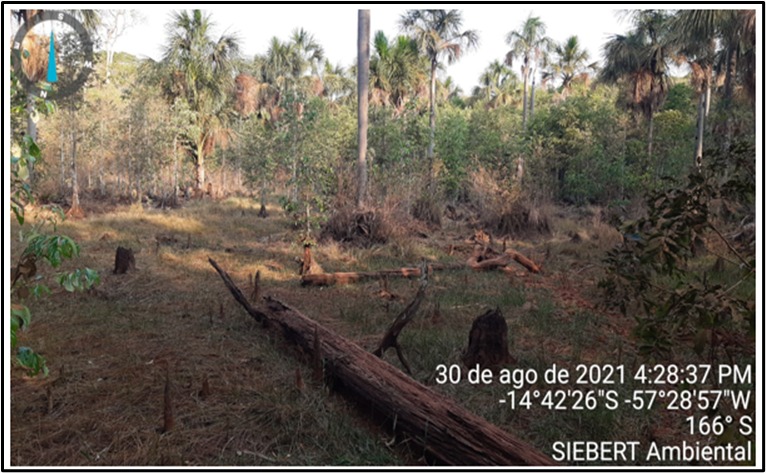
Noticeable difference: Condition of Queima Pé in August 2021.
“The Queima Pé spring has been returned to the municipality in a vital condition. Water is flowing again with strength — a result of coordinated, technical, and environmentally responsible work, now proven in numbers,” highlighted Délio Siebert.
Results of the Revitalization
This July’s flow rate of 743.04 m³/day occurred even though the last rainfall — about 40 mm — happened on June 23. Flow tends to increase between December and March, often tripling by March, when it can exceed 2,000 m³/day.
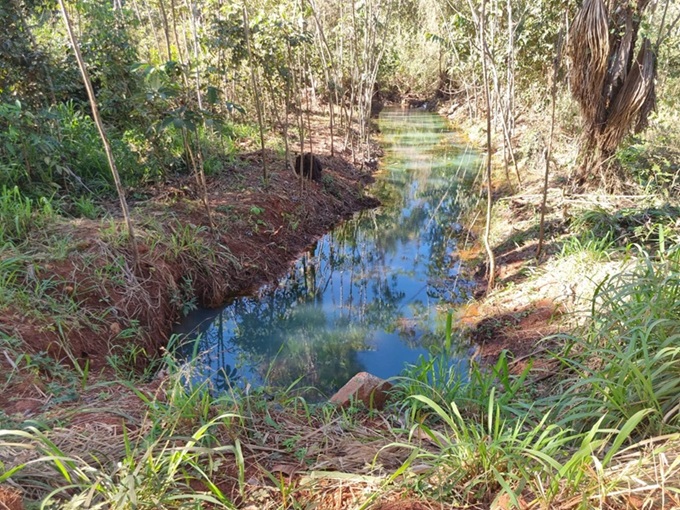
Image of the Queima Pé spring on July 12.
To grasp the revitalization’s impact, consider the drought period of 2024: rainfall stopped in mid-April and only resumed in October — over six months without rain and with high temperatures recorded in the final months of the year.
On the other hand, from October through June, rainfall totaled well over 2,000 millimeters. The abundant precipitation during the last rainy season, therefore, contributed significantly to the current flow of the Queima Pé’s main spring.

Décio Siebert, from IPAC, led the revitalization efforts in September 2021.
Figures and Proportion
With an estimated urban population of 102,267 people (based on the 2022 Census and a floating population of 3,000), the daily water demand in Tangará da Serra’s urban area is around 15,749 m³/day, based on the national average consumption of 154 liters per person (ANA and SNIS data).
The current flow of the Queima Pé spring — 743.04 m³/day — represents just under 5% of this need, but it holds major strategic value. It marks the revival of a natural resource long stressed by poor land use, erosion, and silting.
Siebert points out that the 4.72% figure comes from just one spring, which he says is significant and worth celebrating. “If a single spring accounts for almost 5% of a city’s water needs, imagine if we revitalized the other 13 key springs in the Queima Pé basin, located upstream from the Water Treatment Plant (ETA),” he emphasized.
He also stressed the importance of the 2021 revitalization work, now being replicated in other springs such as the Cristalino stream, near the city’s ring road. “While it’s a modest percentage compared to the city’s full demand, it’s highly meaningful from an environmental standpoint. This spring was once considered technically dead — now it provides regular flow,” he added.
Restoration and Institutional Partnership
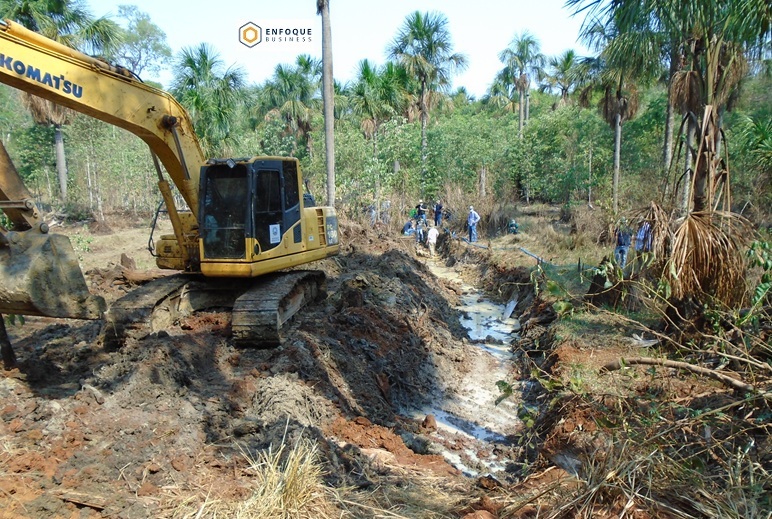
Work carried out in 2021 began showing results as early as 2022, with the recovery of the main spring’s flow.
The 2021 efforts included:
– Construction of terraces to control surface runoff around the spring;
– Installation of retention basins along nearby roads;
– Implementation of infiltration structures to enhance aquifer recharge;
– Planting of native species to restore riparian vegetation;
– Environmental education with local farmers and residents;
– Technical monitoring of flow and water quality.
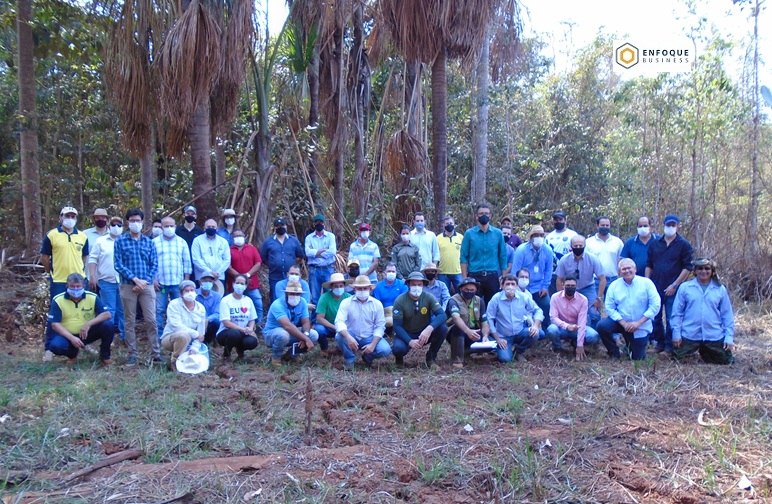
The recovery of the spring is a direct result of actions carried out in 2021 by IPAC, in partnership with the State Public Prosecutor’s Office, the Municipality of Tangará da Serra, Samae, Sema-MT, Rotary Club, Rural Union, and other civil society organizations.
The project was coordinated by IPAC in partnership with Tangará da Serra’s City Hall, funded by the State Public Prosecutor’s Office and private companies, with support from Samae, SEMA-MT, CBH Sepotuba, Rotary Club, the Rural Union, and other civil society organizations.
“This is an example of how collaboration between civil society, public authorities, and private entities can generate real results in defense of sustainability. In times of climate uncertainty and growing urban pressure, restoring and protecting springs is more than an environmental action — it’s a strategic move for water security and future planning,” concluded Siebert.


Vigilância em presídios exige reforço; volume de drogas mostra espectro do tráfico

Pesquisa: Russi e Lúdio lideram corrida à ALMT; Chico Guarnieri e Dr João despontam na região

Cobre na mira do crime: Tangará da Serra na rota dos furtos de cabos de usinas fotovoltaicas

Iphan realiza vistoria em áreas de interesse arqueológico de comunidades quilombolas

Cristiano Lopes: O turismo precisa transformar atrativos em produtos e experiências

Vigilância em presídios exige reforço; volume de drogas mostra espectro do tráfico
O Governo de Mato Grosso começa a estudar o uso de drones para reforçar a vigilância nos presídios e unidades...

Pesquisa: Russi e Lúdio lideram corrida à ALMT; Chico Guarnieri e Dr João despontam na região
A disputa pelas 24 cadeiras da composição da Assembleia Legislativa de Mato Grosso apresenta seus primeiros índices de preferências do...

Cobre na mira do crime: Tangará da Serra na rota dos furtos de cabos de usinas fotovoltaicas
A expansão das usinas fotovoltaicas na zona rural criou um novo alvo para o crime organizado: os cabos de cobre...
Iphan realiza vistoria em áreas de interesse arqueológico de comunidades quilombolas
Uma equipe técnica do Instituto do Patrimônio Histórico e Artístico Nacional (Iphan) percorre nesta semana a região de Porto Estrela...

Cristiano Lopes: O turismo precisa transformar atrativos em produtos e experiências
Apresentada durante o 1º Fórum de Etnoturismo de Tangará da Serra, palestra mostrou a dimensão econômica da atividade e os...


Mais de 90% dos frigoríficos auditados em MT cumprem TAC da Carne, afirma MPF
Mais de 90% dos frigoríficos convocados em Mato Grosso concluíram as auditorias previstas no Termo de Ajustamento de Conduta (TAC)...


Bets drenam renda das famílias enquanto agro enfrenta crédito caro e novas pressões
O agronegócio e a economia brasileira estão no centro de uma discussão que vai além das lavouras e dos mercados....

Mato Grosso lidera o ranking nacional de queimadas e acende alerta no campo
O avanço acelerado das queimadas em Mato Grosso é a abordagem da edição desta sexta-feira (21) da coluna Circuito Rural,...


Fórum define prioridades para transformar potencial em etnoturismo organizado na região
Capacitação, tecnologia, políticas públicas regionais e aproximação entre sociedade e povos indígenas estão entre os encaminhamentos debatidos em Tangará da...


1º Fórum aponta caminho para organização do etnoturismo na “Grande Chapada dos Parecis”
Evento reuniu lideranças indígenas, gestores públicos e representantes do setor para discutir a estruturação de uma atividade que envolve sete...


Tangará da Serra: Dia D de multivacinação será neste sábado em todas as USFs e no Shopping
O Dia D da Campanha Nacional de Multivacinação será realizado neste sábado (22) em todo o país, com foco na...


ATUALIZAÇÃO: PJC atinge estrutura do tráfico em Tangará, Cuiabá e São José; PM age em Barra do Bugres
A sequência de grandes apreensões e operações reforça que o tráfico mantém uma estrutura ativa e capilarizada na região. Depois...


Fórum de Etnoturismo discutirá estratégias para fortalecimento do turismo regional
O Sebrae/MT, em parceria com a Prefeitura de Tangará de Serra e com a Fundação Nacional dos Povos Indígenas (FUNAI),...


Tangará da Serra: Câmara aprova R$ 1,2 milhão para realização do Natal Iluminado 2026
Recursos economizados pela Câmara Municipal e devolvidos antecipadamente ao Executivo serão incorporados ao orçamento para financiar o projeto de decoração...


Composição da Câmara Municipal contará com representante da agricultura familiar
A composição da Câmara Municipal de Tangará da Serra terá uma novidade nas próximas sessões ordinárias. O produtor rural Valdeci...
-
Policial7 dias atrás
ATUALIZAÇÃO: PJC atinge estrutura do tráfico em Tangará, Cuiabá e São José; PM age em Barra do Bugres
-
Saúde Pública6 dias atrás
Tangará da Serra: Dia D de multivacinação será neste sábado em todas as USFs e no Shopping
-
Turismo5 dias atrás
1º Fórum aponta caminho para organização do etnoturismo na “Grande Chapada dos Parecis”
-
Circuito Rural5 dias atrás
Mato Grosso lidera o ranking nacional de queimadas e acende alerta no campo
-
Turismo5 dias atrás
Fórum define prioridades para transformar potencial em etnoturismo organizado na região
-
Economia & Mercado4 dias atrás
Bets drenam renda das famílias enquanto agro enfrenta crédito caro e novas pressões
-
PECUÁRIA SUSTENTÁVEL2 dias atrás
Mais de 90% dos frigoríficos auditados em MT cumprem TAC da Carne, afirma MPF
-
Turismo2 dias atrás
Cristiano Lopes: O turismo precisa transformar atrativos em produtos e experiências